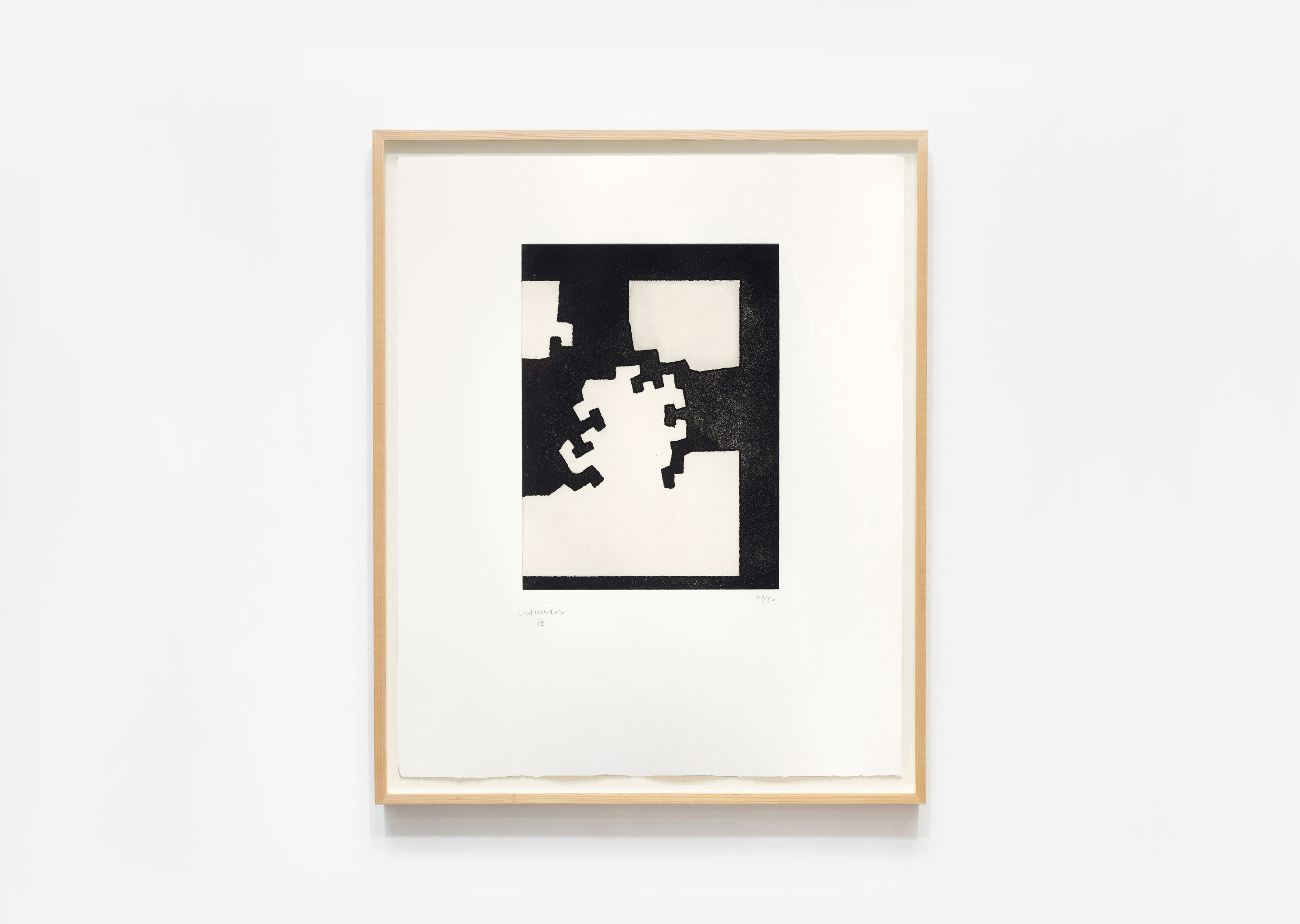
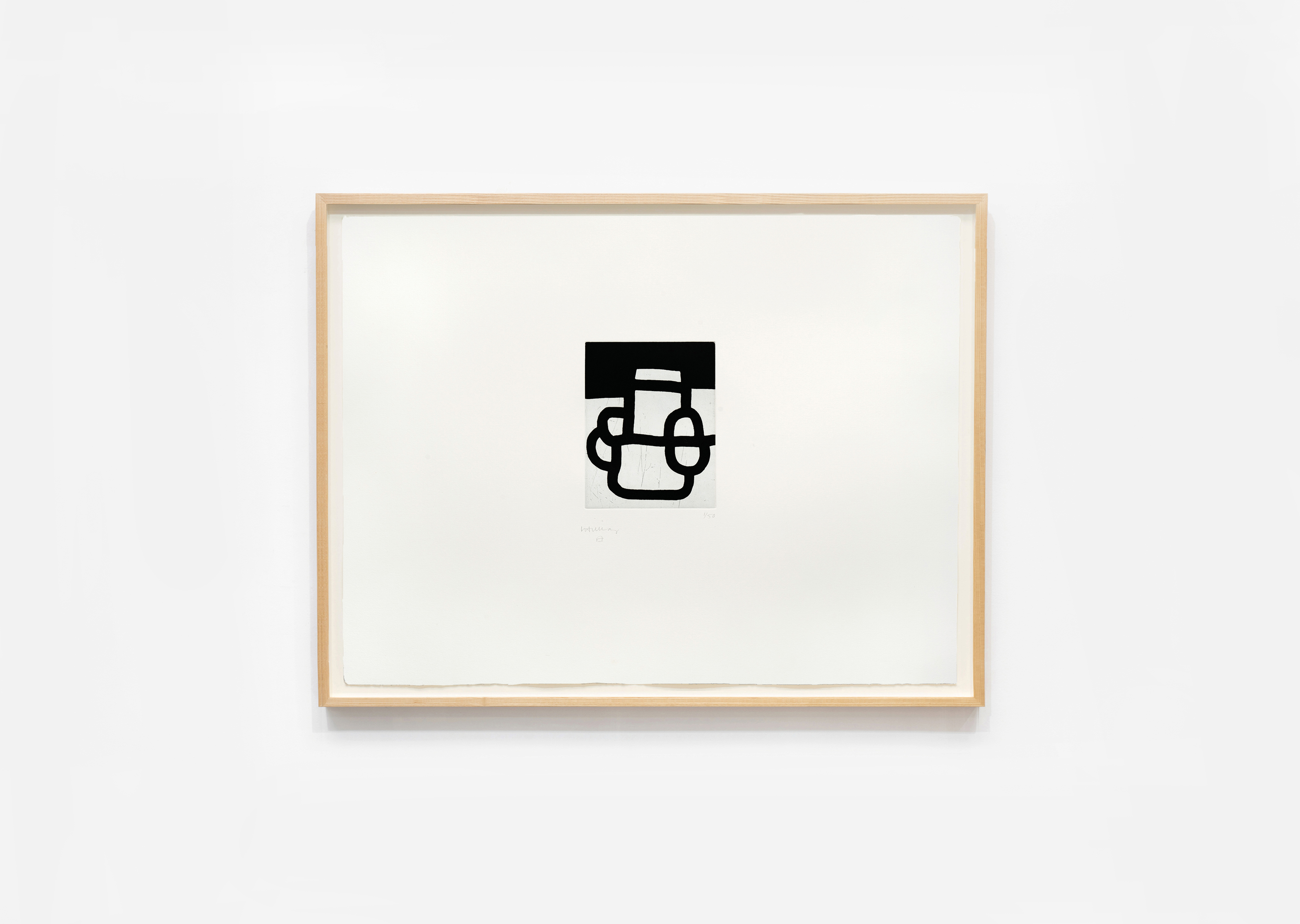
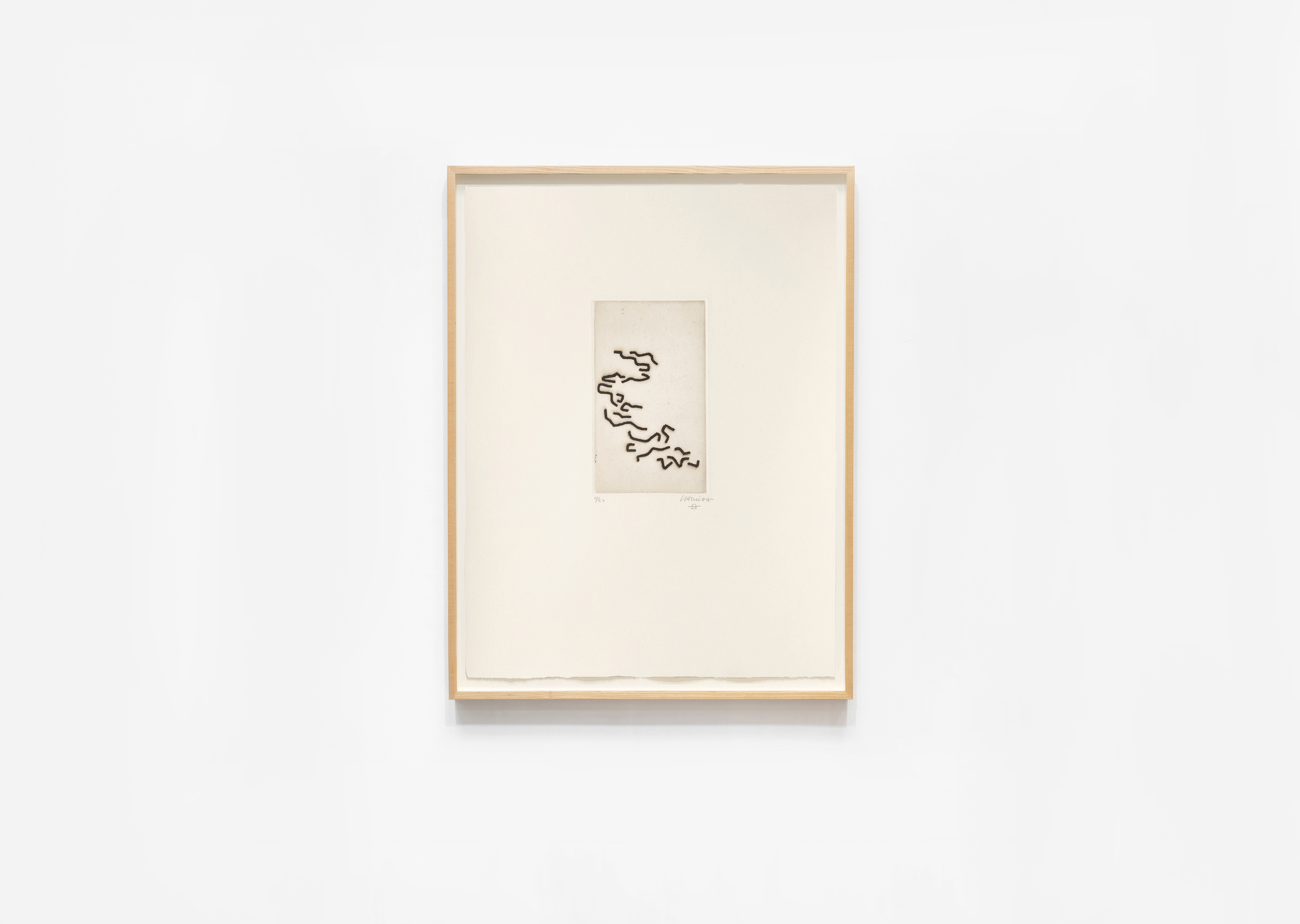
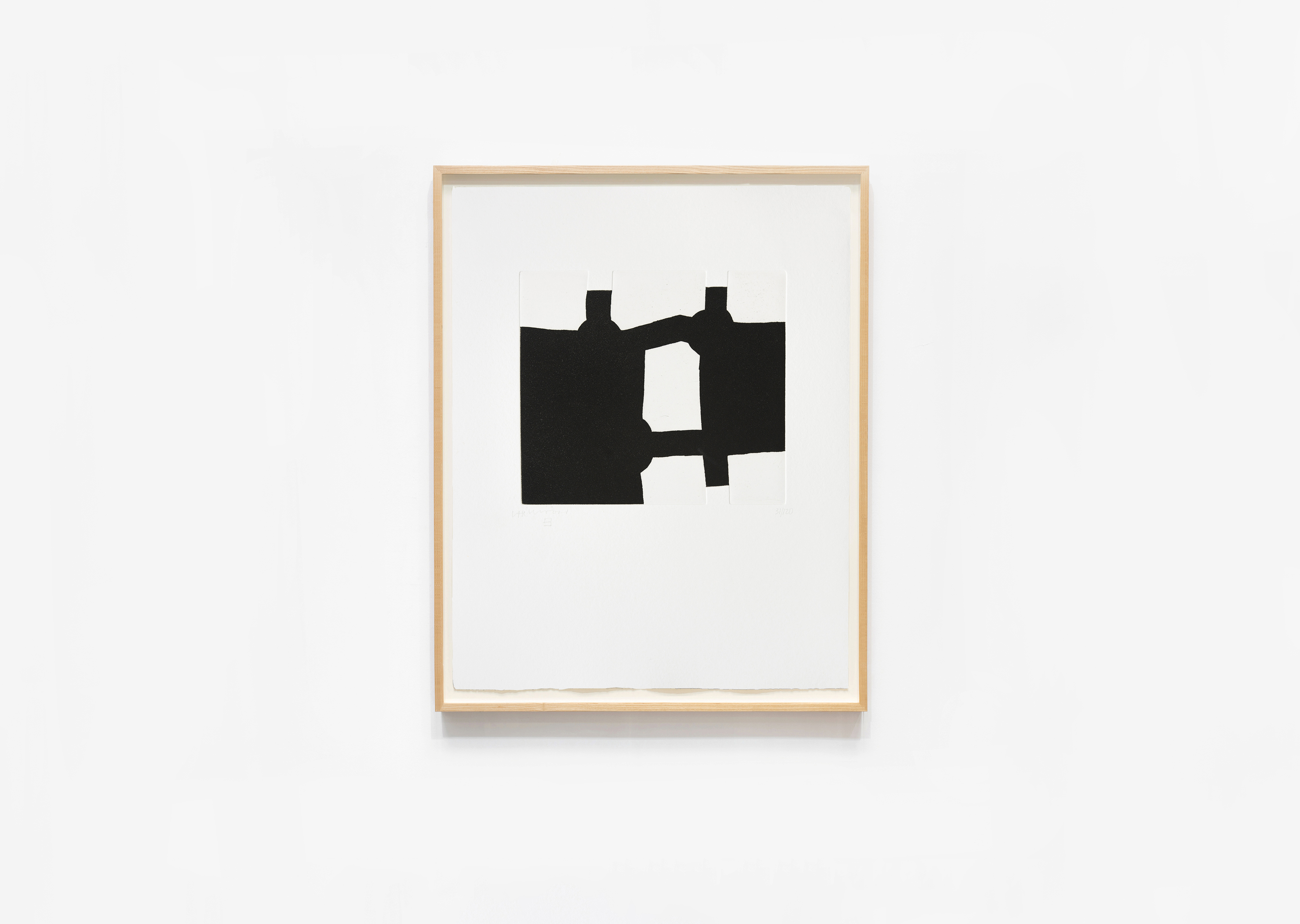
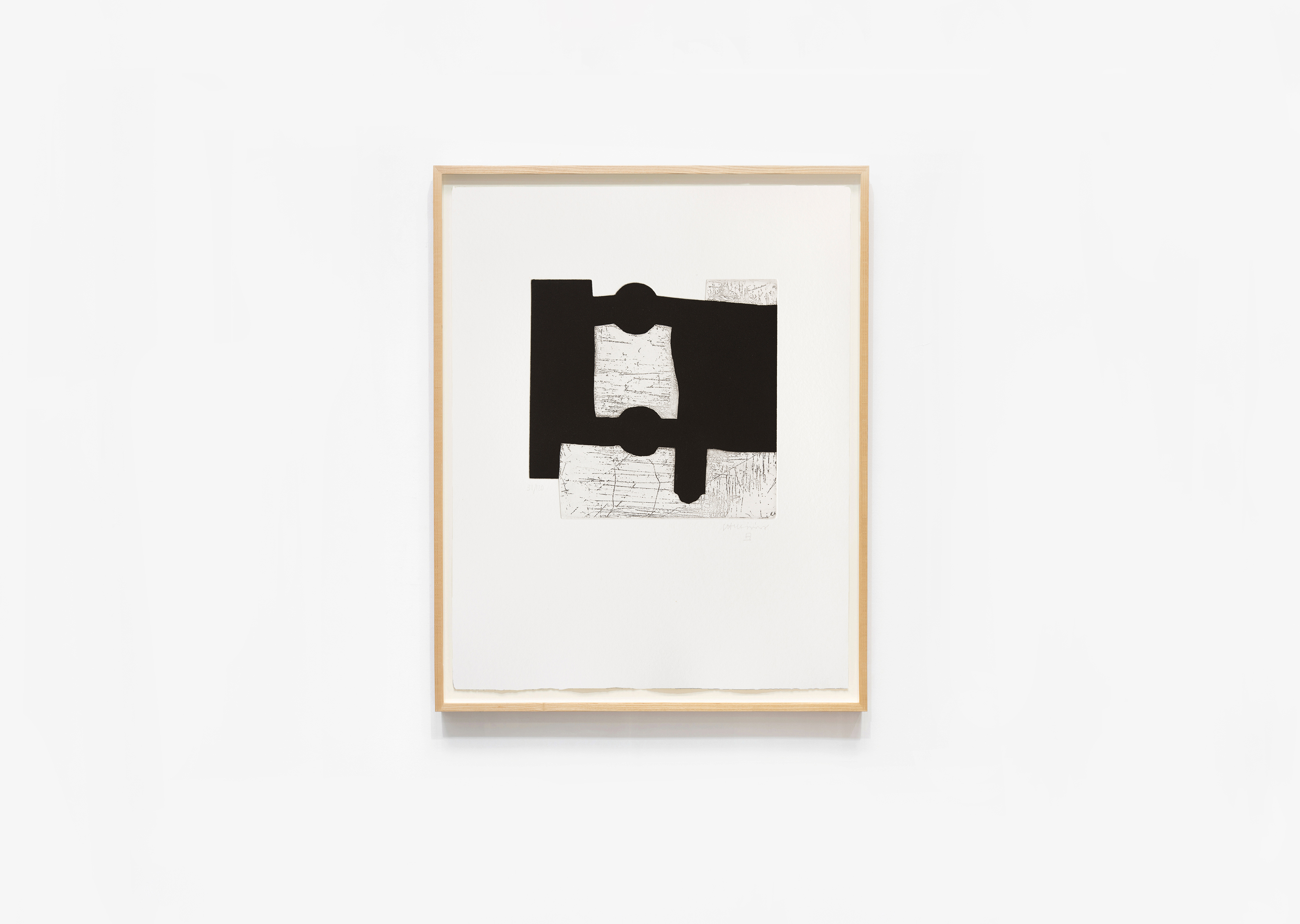
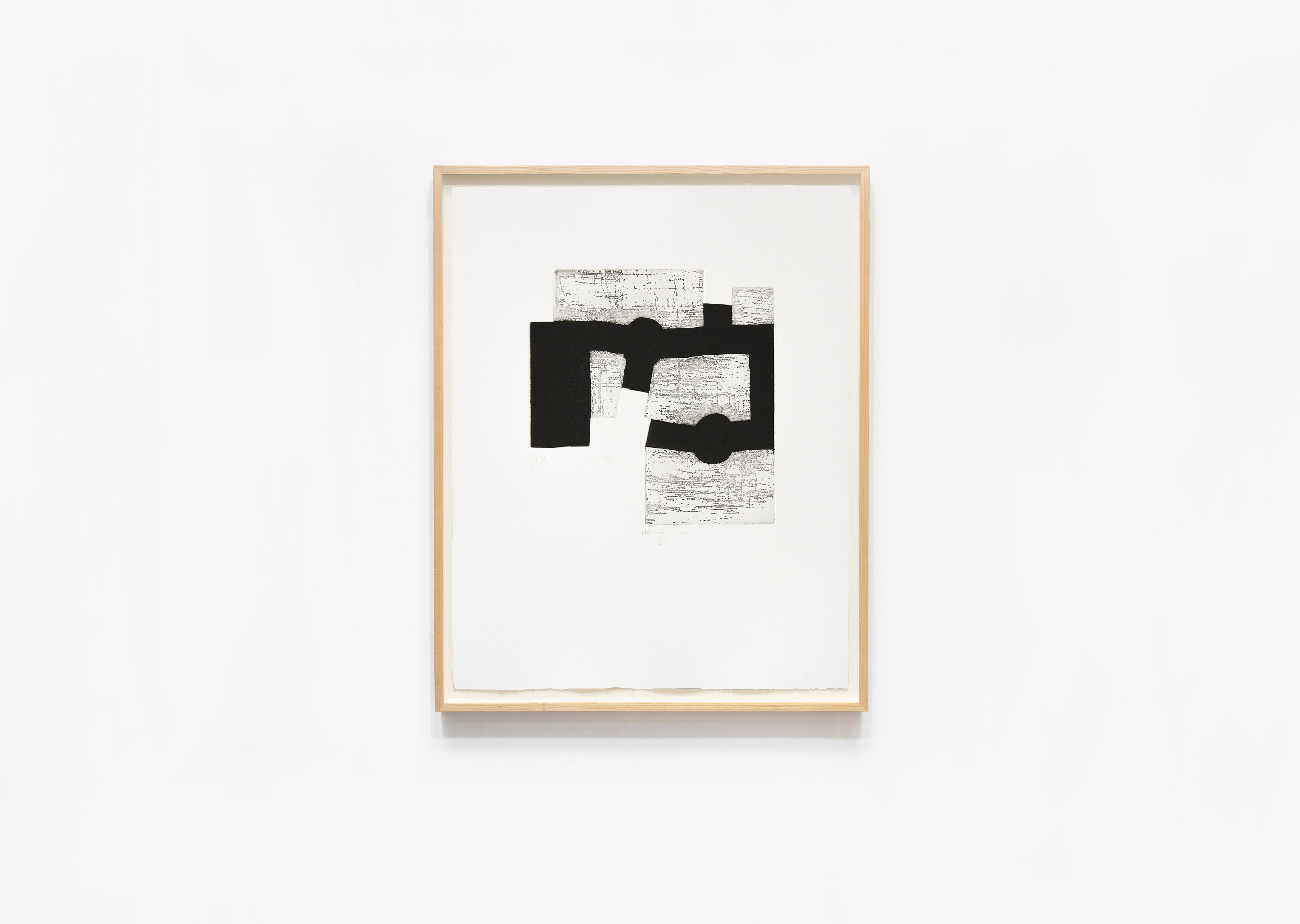
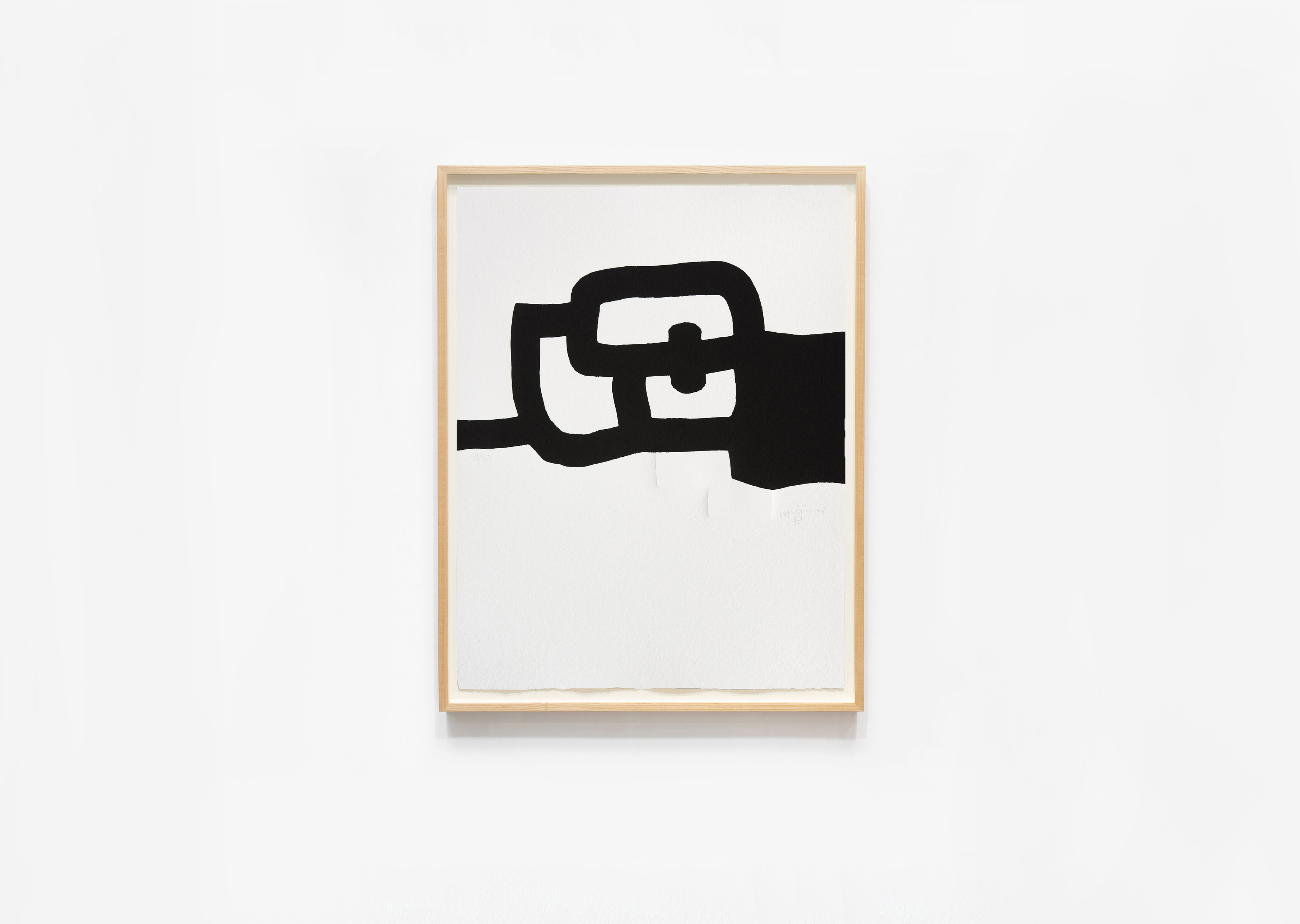
Eduardo Chillida (1924–2002), one of the most remarkable sculptors of the second half of the 20th century, constantly explored space and form through a wide range of materials: iron, wood, stone, chamotte clay, as well as more contemporary materials such as concrete and steel. He also worked through drawing, cutting, collage, engraving, and more.
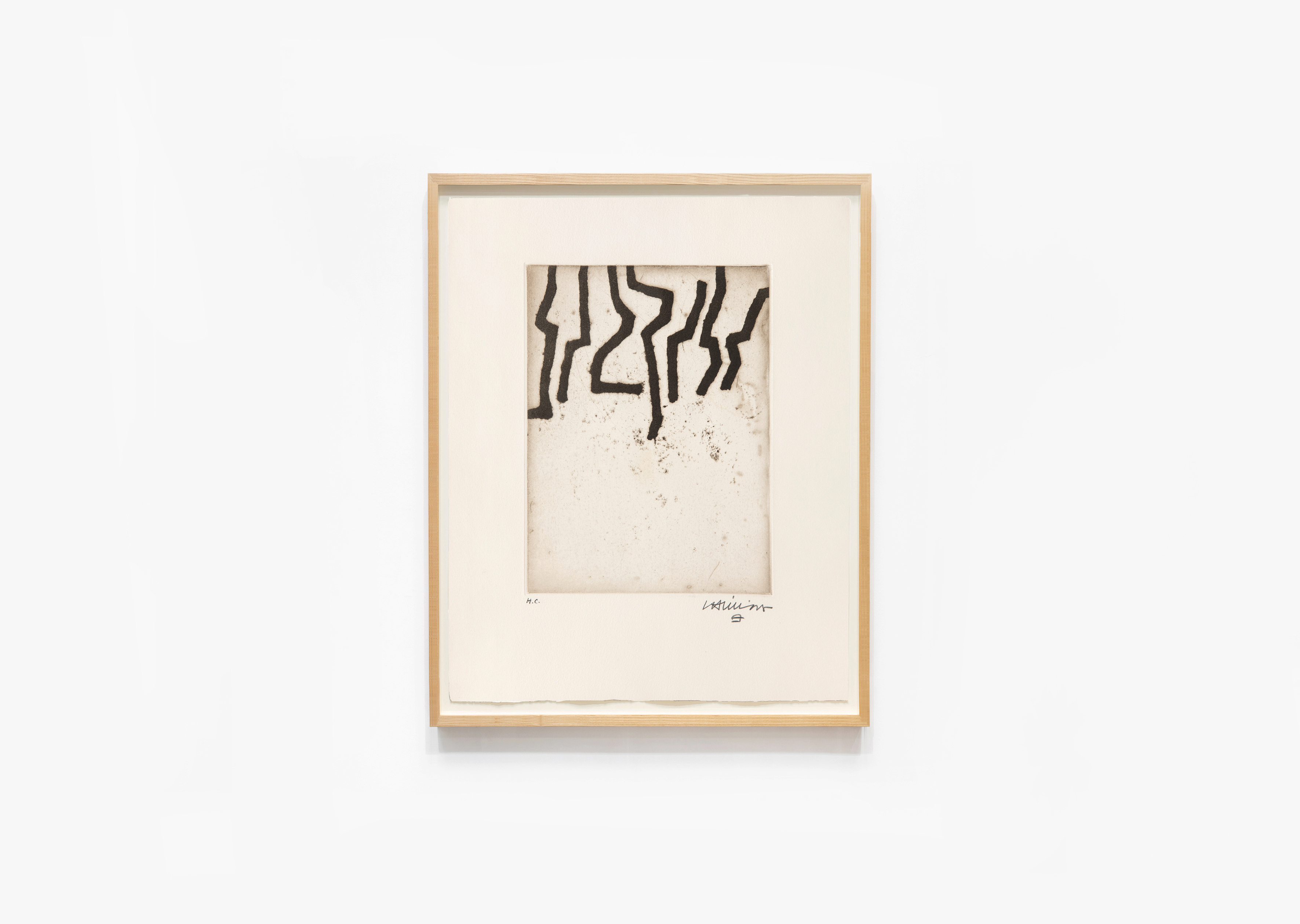
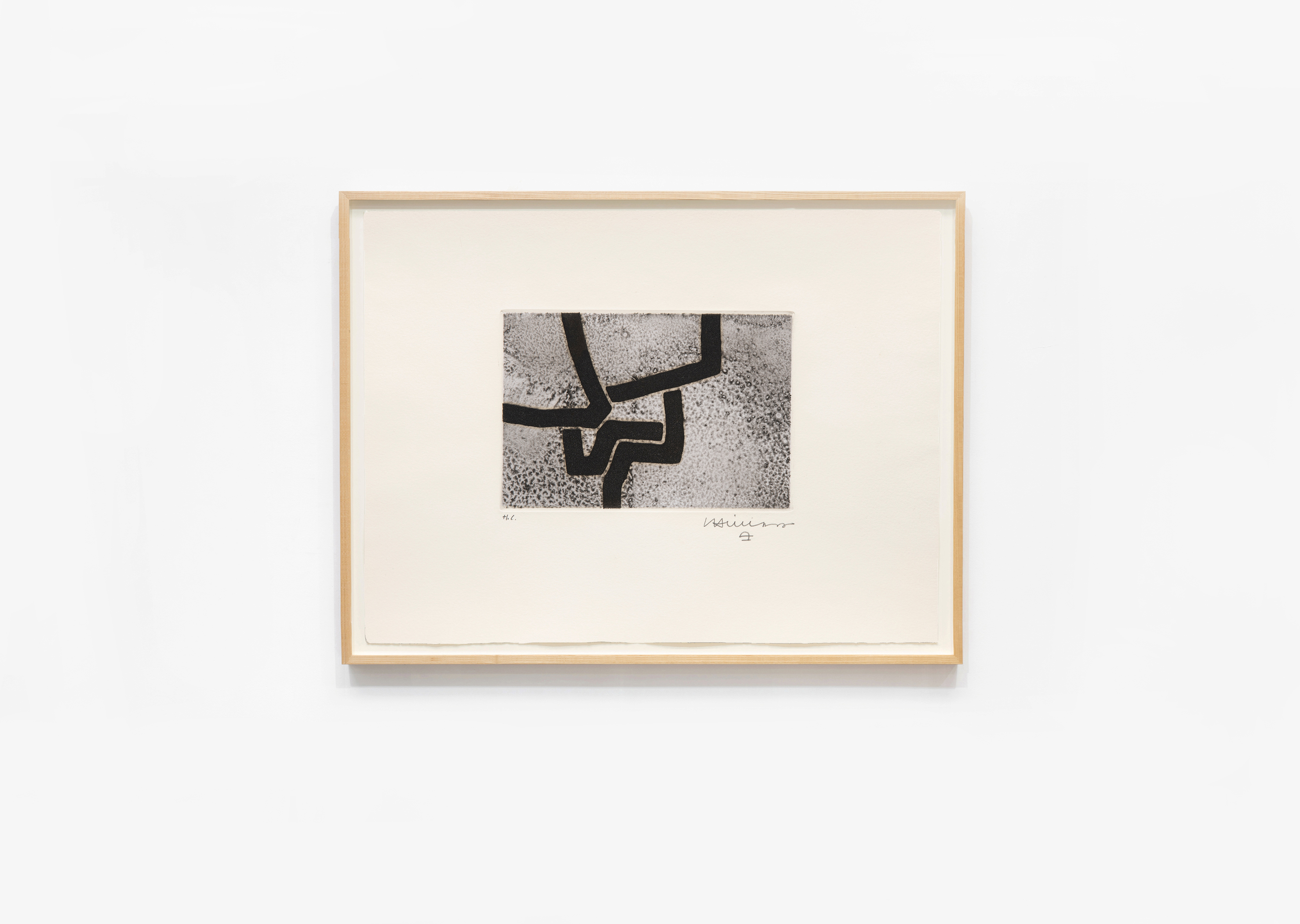
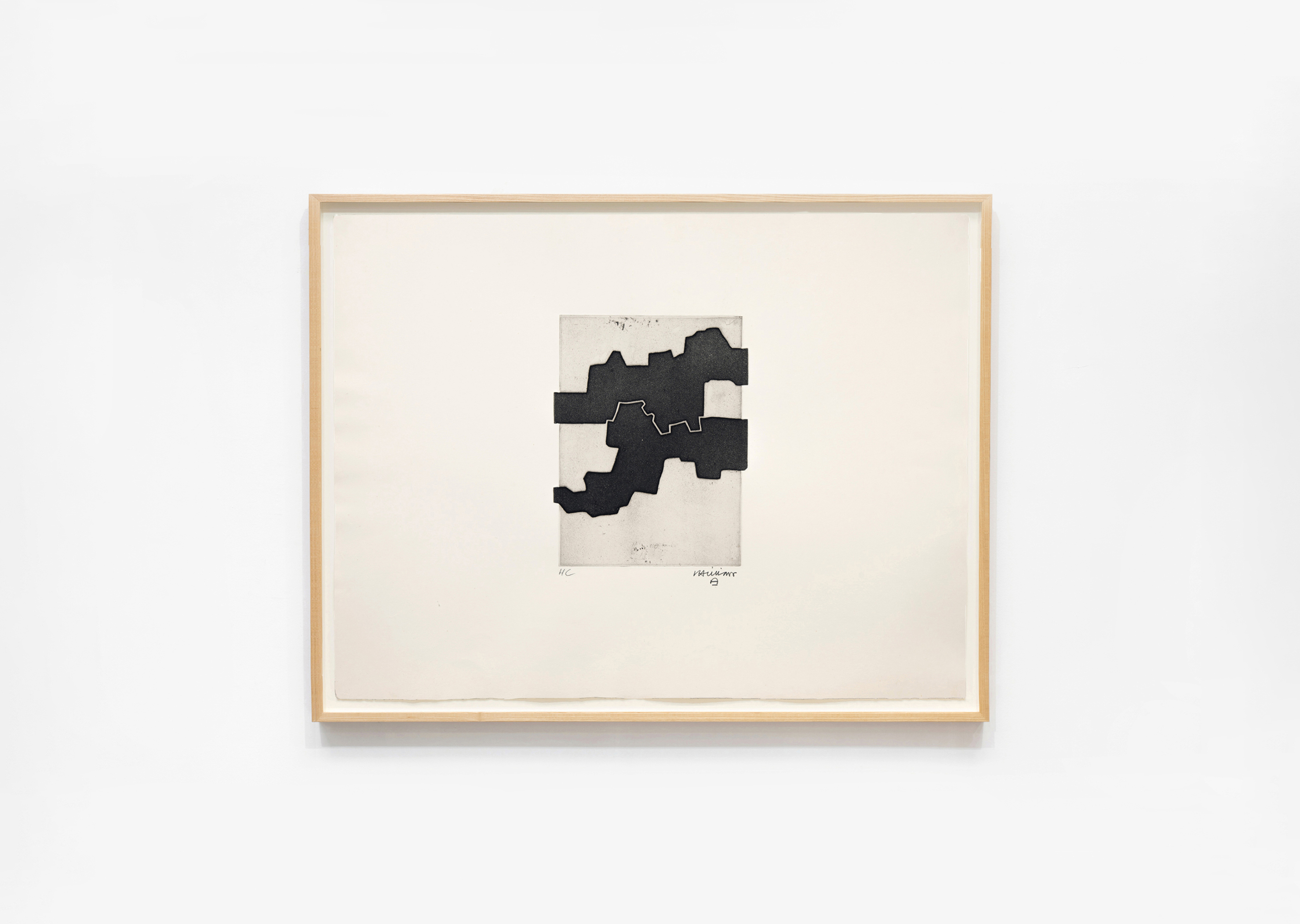
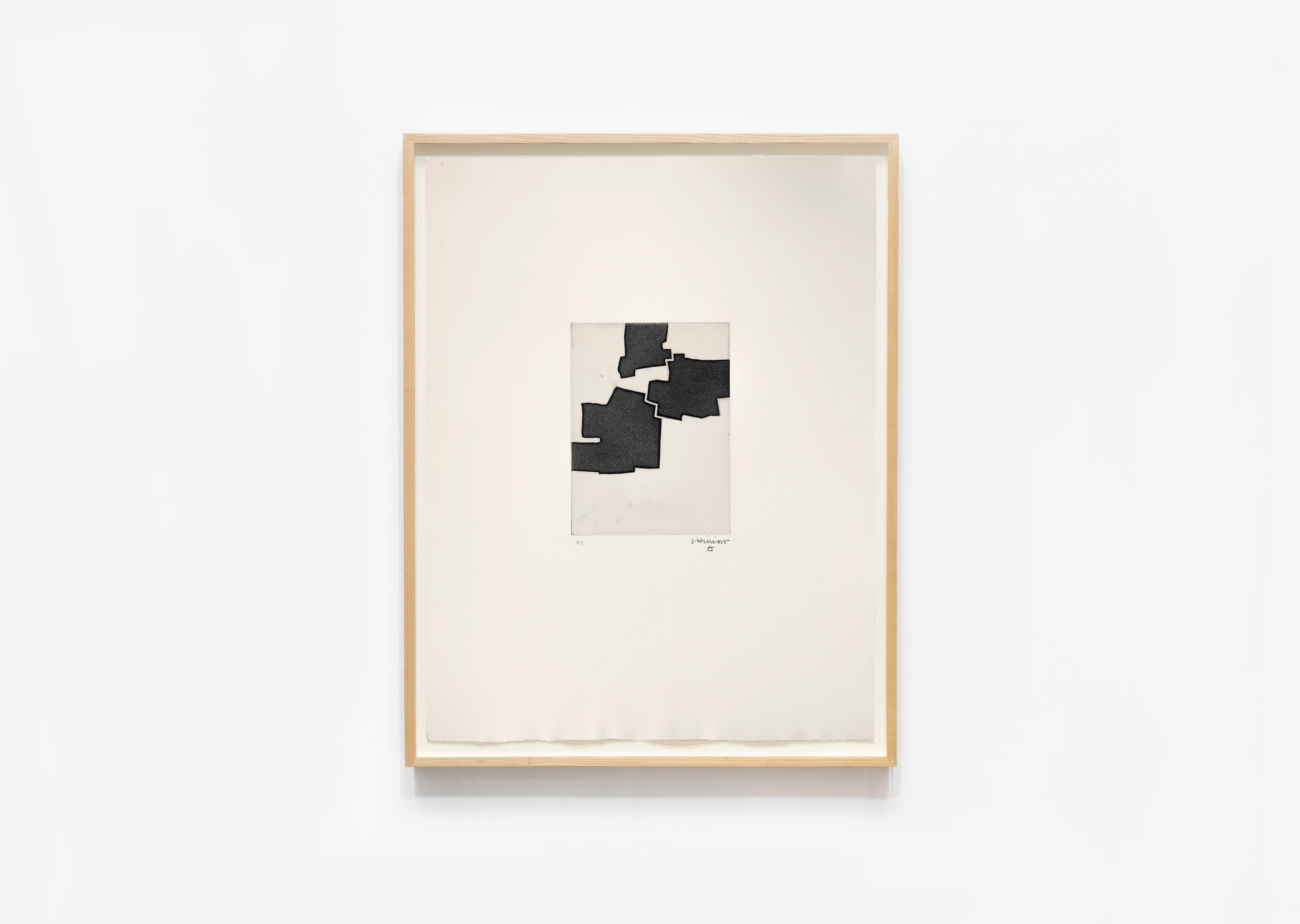
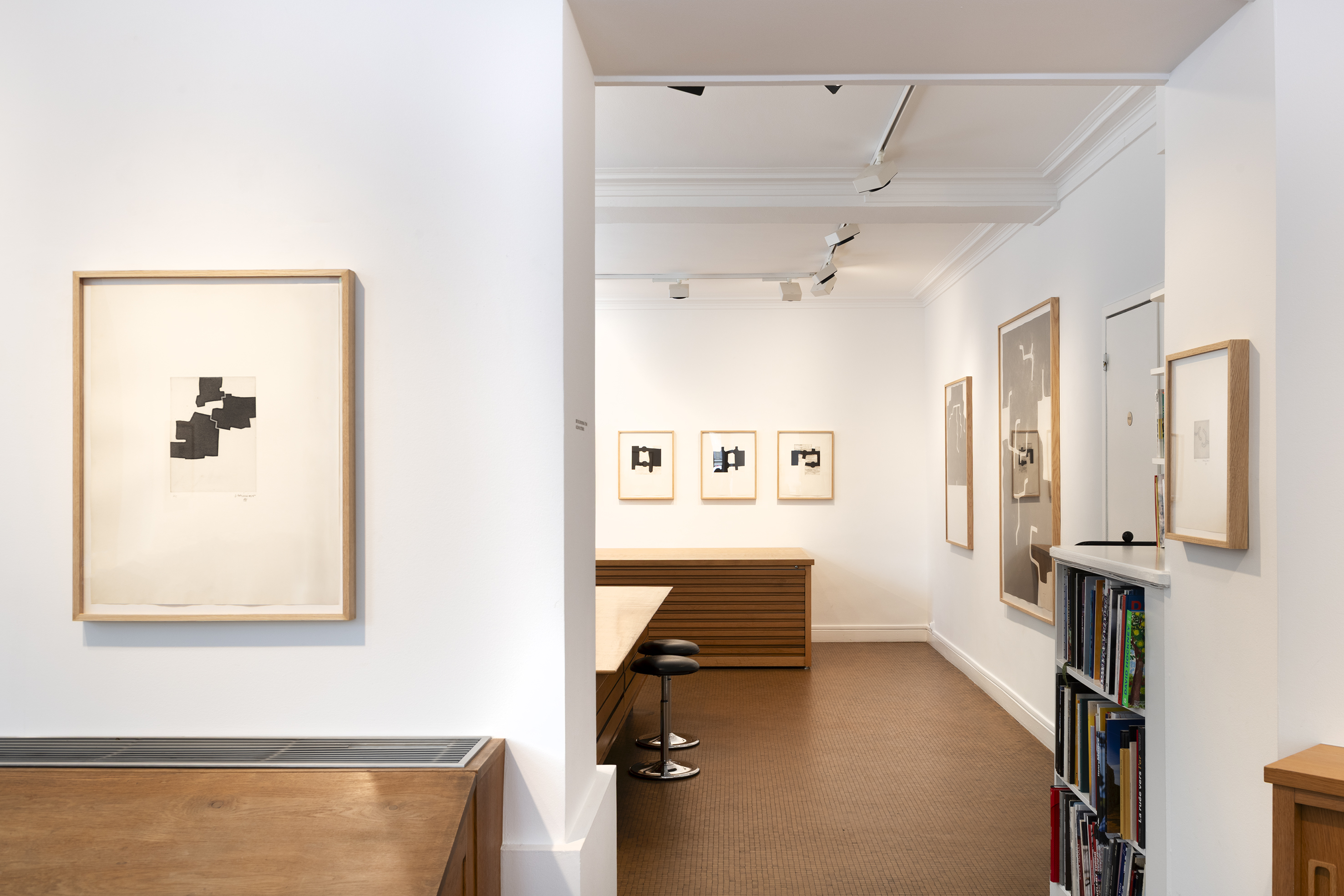
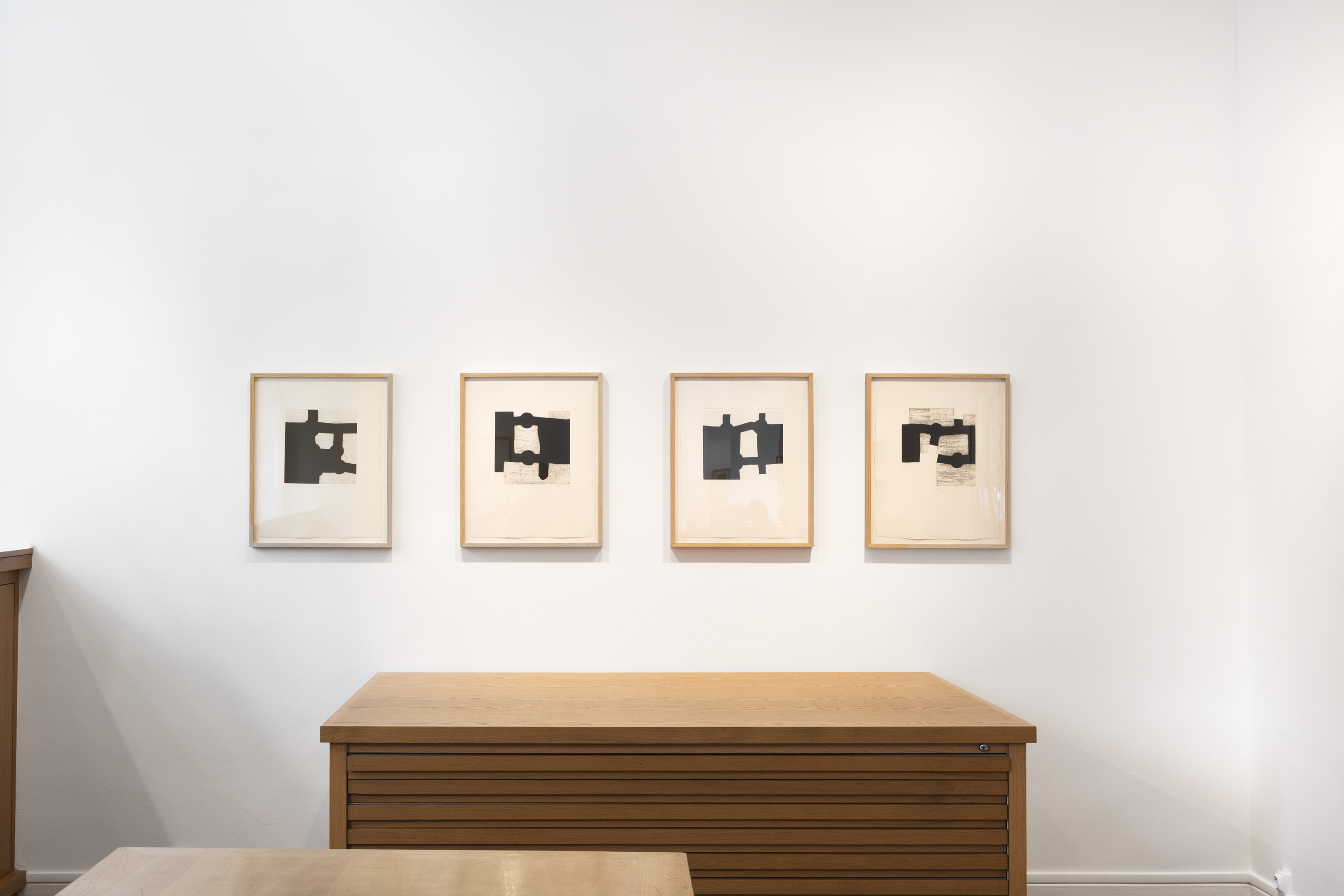
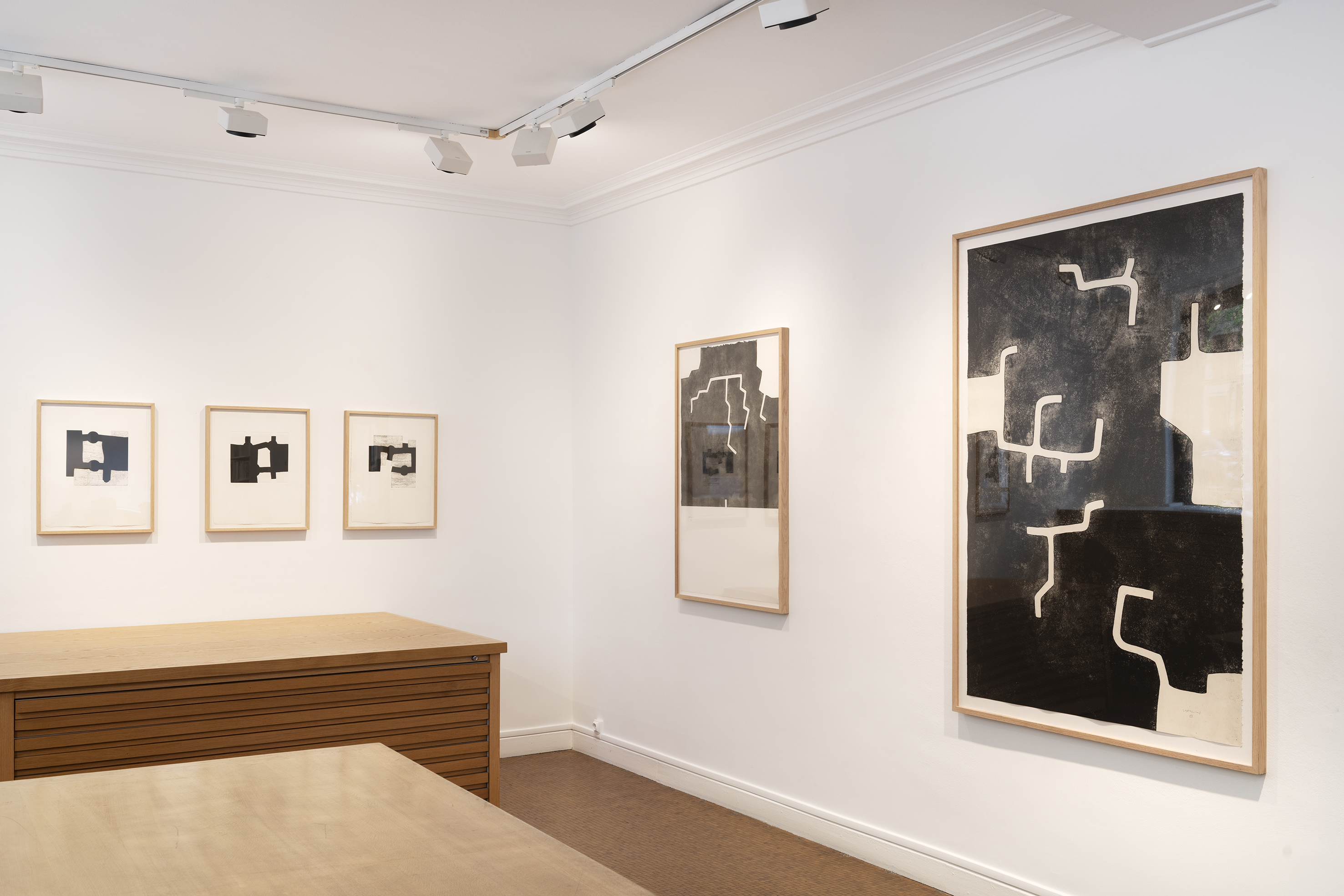
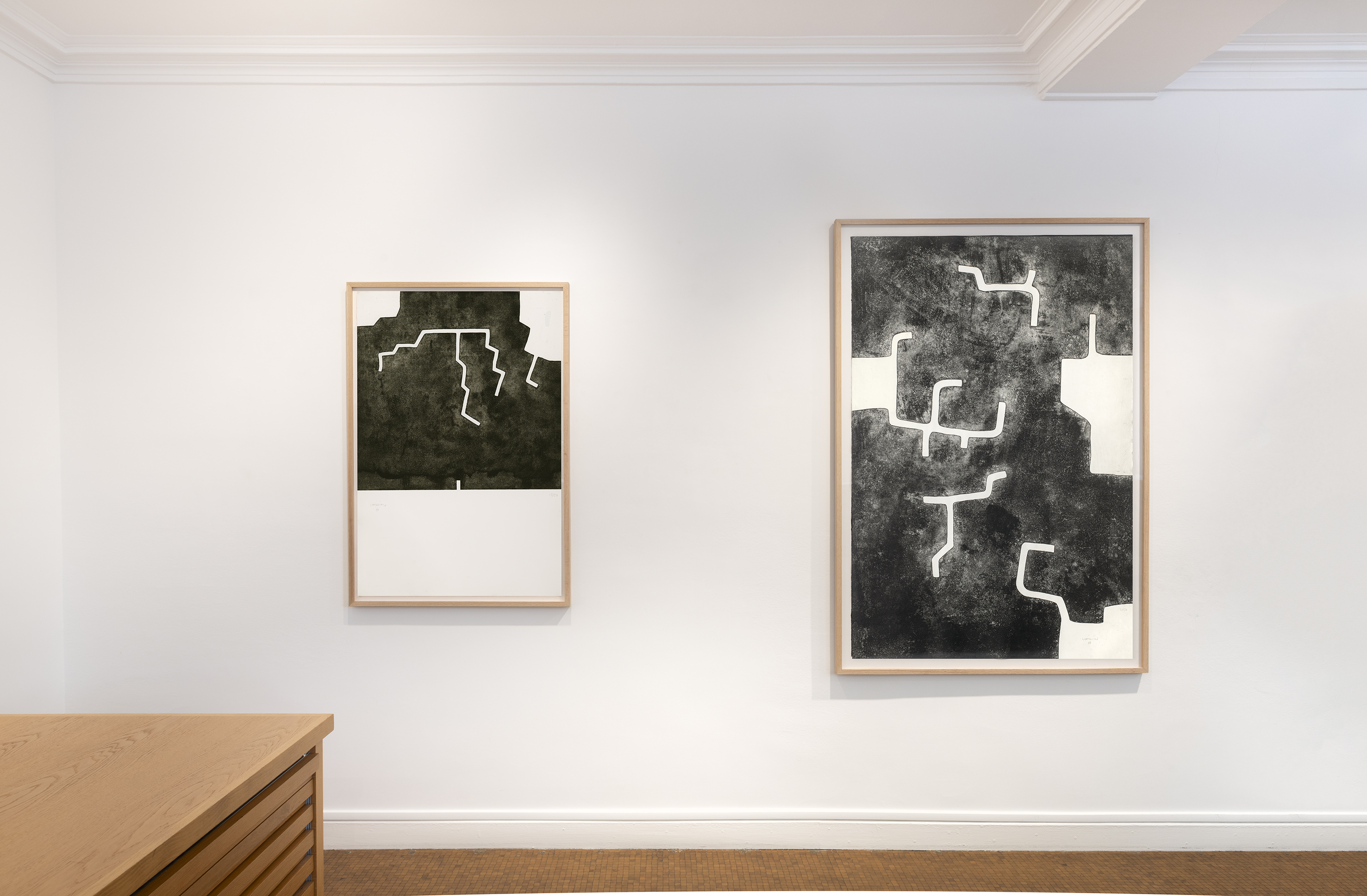
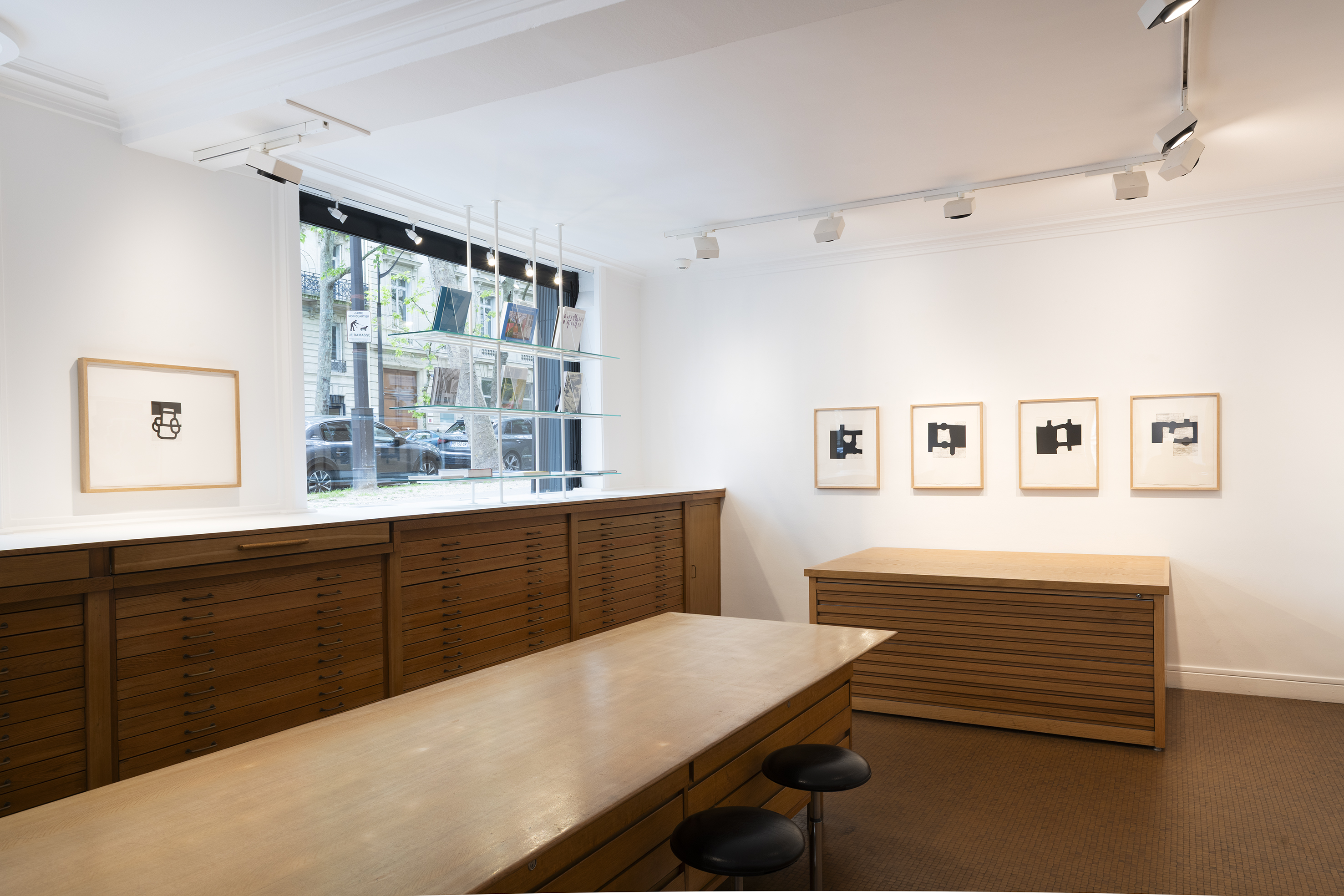
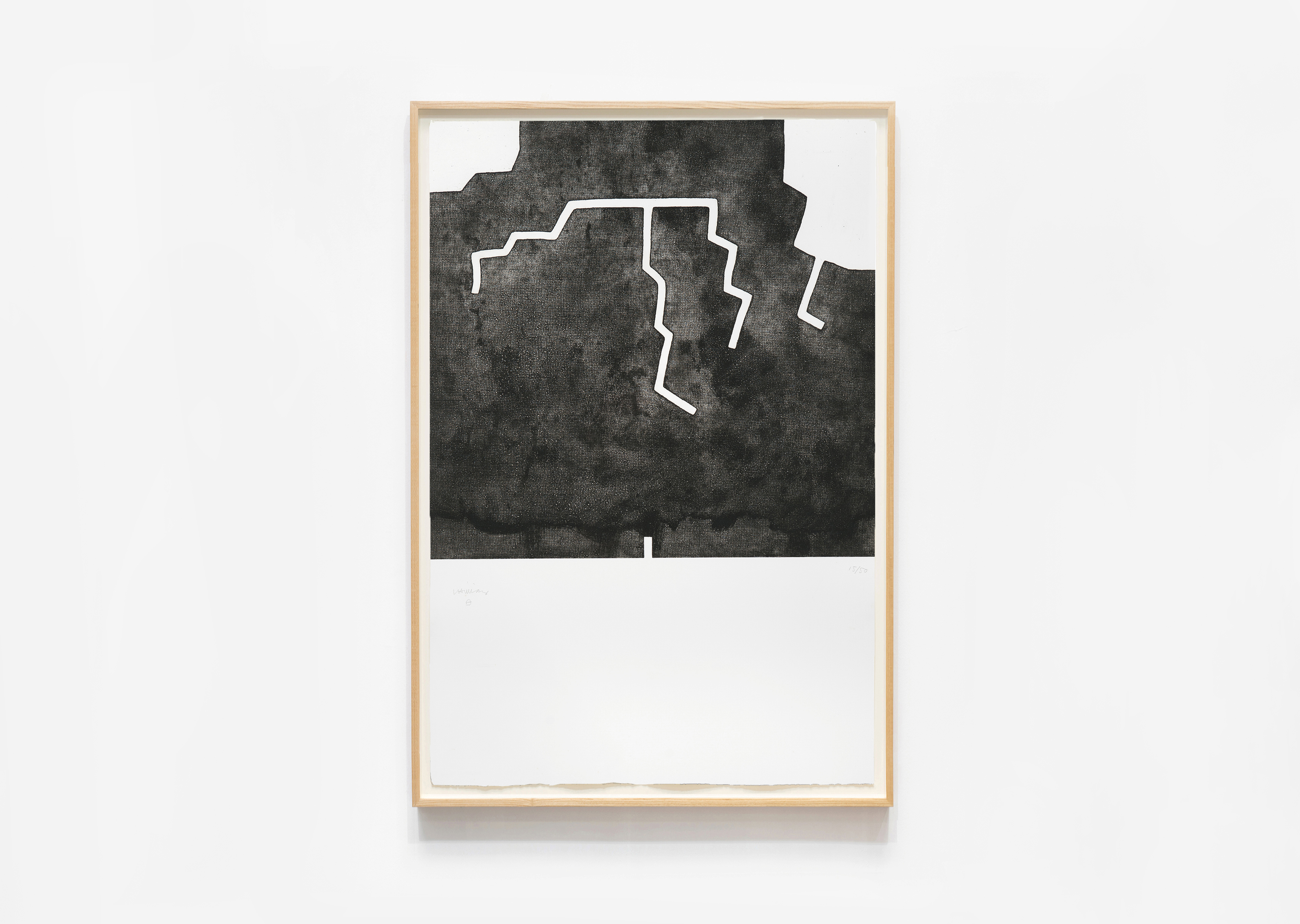
Chillida’s works on paper always held an important place in his artistic practice. The prints presented in this exhibition reflect his desire to explore the relationship between voids and solids within a two-dimensional work. The density of matter is conveyed through black; its absence through white. At times, he sought the opposite effect. When engraving, Chillida drew lines, but he also studied the accidental marks produced by the plate, deliberately creating new ones. He carefully selected the grain and texture of the paper — matte, thick, or smooth — and developed sometimes surprising compositions.
His engraved work is rich, concise, and demanding. It has been the subject of several museum exhibitions and has been compiled in a four-volume catalogue raisonné. It is worth recalling that Chillida first exhibited at the Gallery at 13 rue de Téhéran in 1950, as part of a group exhibition of young artists that included Pierre Alechinsky. This was followed by his first solo exhibition in 1956 — seventy years ago — accompanied by a catalogue prefaced by Gaston Bachelard.





.jpg)